

ABNA24 - The US military presence in West Asia, particularly through its numerous and extensive bases in the Persian Gulf states, has long been one of the main factors contributing to instability and escalating tensions in the region.
This issue can be examined more clearly in light of the recent 40-day US-Israeli war against Iran and the subsequent signing of the Islamabad Memorandum of Understanding.
A comparative assessment of the US military deployment before and after the war, alongside the provisions of the Islamabad memorandum, shows that the presence and continued operation of these bases not only contradict the peaceful spirit of the agreement but also constitute a permanent threat to peace and security in the region.
For decades, the United States has established an extensive network of military bases across West Asia. According to available reports, the US typically deploys around 40,000 to 50,000 troops at at least 19 locations across more than 12 countries in the region, either permanently or temporarily.
This network includes eight permanent bases and 11 facilities accessible to US forces. Among the most important is Al Udeid Air Base in Qatar, which, with around 10,000 personnel, is considered the largest US military base in West Asia and serves as the forward headquarters of the US Central Command (CENTCOM).
Bahrain hosts the headquarters of the US Fifth Fleet, while the United States also maintains extensive ground and air bases in Kuwait. Washington likewise has major military bases in Saudi Arabia and the United Arab Emirates.
These bases, most of which are located in close proximity to Iran’s borders, have long been viewed as launchpads for threatening and exerting pressure on the Islamic Republic of Iran. This aggressive military posture had created a state of persistent tension in the region even before the 40-day war, increasing the risk of a military confrontation breaking out at any moment.
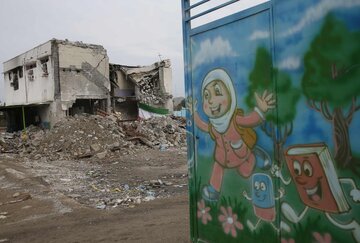
The US-Israeli attack on Iran, which began on February 28, 2026, clearly exposed the threatening nature of these bases. During the war, in response to extensive attacks, Iran targeted US facilities in various West Asian countries, including several military bases. Reports indicate that many US military facilities were damaged or destroyed during the conflict.
Iran’s missile and drone attacks clearly demonstrated that major US bases in the region, particularly those located close to Iran, are highly vulnerable to retaliatory attacks. This vulnerability, which had previously been acknowledged by CENTCOM commanders, effectively demonstrated that the extensive US military presence in the region not only fails to ensure US security, but has itself become a target for attacks, imposing heavy costs.
According to estimates, the cost of rebuilding damaged US bases in the region could reach $50 billion, while the total cost of the war by the end of September 2026 is estimated at around $375 billion.
Following this war, the Islamabad Memorandum was concluded between the United States and Iran. Officially titled the “Islamabad Memorandum between the United States of America and the Islamic Republic of Iran,” the document consists of 14 provisions.
Under the first provision, the two sides pledged that “from now on, they shall not initiate any war or military operation against each other and shall refrain from threatening or using force against one another.” The second provision also emphasizes respect for each other’s sovereignty and territorial integrity and non-interference in each other’s internal affairs.
However, the key issue is that despite these explicit commitments, the United States has taken no steps to dismantle or significantly reduce its military bases near Iran. Moreover, the fourth provision of the memorandum merely refers to the “withdrawal of its forces from the vicinity of the Islamic Republic of Iran within 30 days following the final agreement.” This vague and conditional wording, rather than constituting a firm commitment to end an offensive military presence, indicates the continuation of the existing situation.
The continued operation of these bases is, in practice, a violation of the provisions of the Islamabad Memorandum. The United States has dozens of military bases located within several hundred kilometers of Iran’s borders, equipped with advanced military hardware, fighter jets and missile launchers. This situation amounts to a “threat of the use of force,” which is explicitly prohibited under the first provision of the memorandum.
The offensive nature of these bases becomes even clearer when considering that the US Central Command (CENTCOM), which is responsible for planning and conducting military operations in the region, is headquartered right at the heart of this network—in Qatar. Therefore, these bases are not merely defensive facilities; they also serve as command-and-control centers for potential and actual offensive operations.
This comes despite the fact that even senior US military and intelligence officials acknowledge that the current structure of the country’s military deployment in West Asia is an outdated legacy of the Cold War and does not correspond to the realities of the region today.
General Frank McKenzie, a former CENTCOM commander, has explicitly said: “No sane person would put CENTCOM’s forward headquarters 100 miles from Iran [in Qatar].” Such an admission by senior US military officials reinforces the argument that these bases are being maintained not out of defensive necessity, but as instruments for exerting strategic influence and pressure on Iran and other countries in the region.
Moreover, evidence indicates that following the 40-day war, rather than withdrawing from the region, the United States is seeking to reconfigure its military deployment rather than end its presence. Reports suggest that the Pentagon is considering relocating its forces from the Persian Gulf to Jordan, the occupied Palestinian territories, and Saudi Arabia’s Red Sea coast.
This redeployment, ostensibly aimed at reducing US vulnerability to Iranian attacks, would in fact mean the continuation of the US military presence and potentially its expansion into new areas. Such a move would not contribute to de-escalation; rather, it could extend the scope of insecurity to more countries in the region and further jeopardize regional stability.
Therefore, the continued presence and operation of numerous US military bases in West Asia should be regarded as deeply destabilizing and contrary to peace. The recent 40-day war clearly demonstrated that these bases are not only ineffective as a deterrent, but can themselves become flashpoints for crises and targets for retaliatory attacks.
The key point is that lasting peace in the region depends on the complete withdrawal of foreign forces and the dismantling of the US military base network, allowing regional countries to ensure their own security without foreign interference or threats.
The continued presence of these bases poses a serious challenge to any efforts to establish peace and stability in West Asia and only contributes to further tensions and regional instability.
/129


Your Comment